Building Multimodal AI Systems
Multimodal AI gets pitched as simply 'a model that handles image and text.' The interesting engineering problem is what happens between the two inputs — whether the system genuinely reasons across them together, or just runs two separate models and stitches the outputs together afterward. Only one of those is actually multimodal.

What multimodal actually means
A genuinely multimodal system reasons across more than one input type — text, image, audio — together, rather than running separate single-input models and combining their results after the fact. The distinction matters because real understanding often depends on the relationship between inputs, not just each one in isolation.
Why it matters
Real-world understanding is rarely single-input. Combining modalities can surface context that a single-input model would miss entirely — an image only makes full sense in light of the text that accompanies it, and vice versa.
Architecture
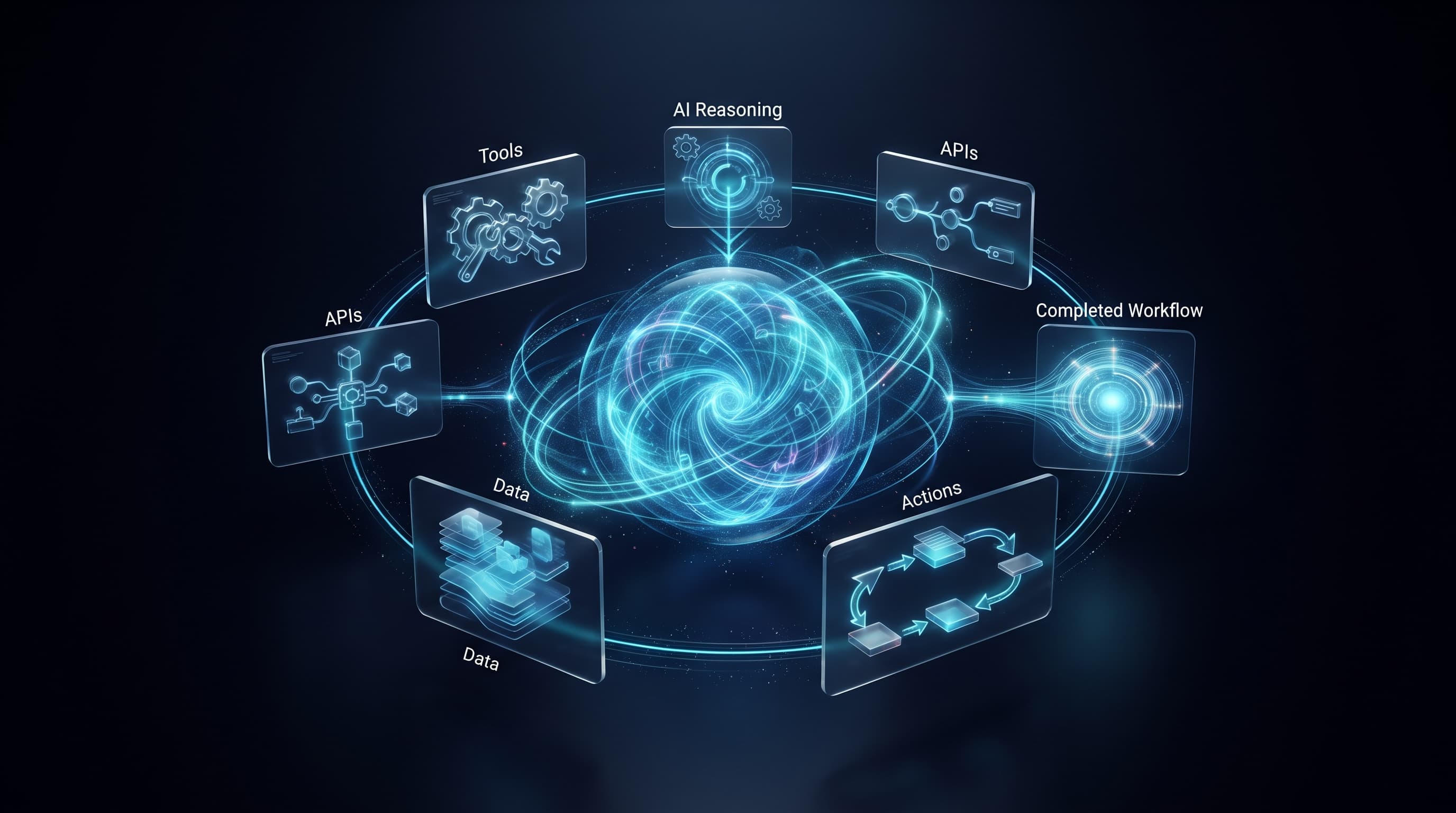
Modality-specific encoders process each input type on its own terms, a fusion step combines those representations into a shared space, and a reasoning or generation layer produces output informed by all inputs together — not by whichever modality happened to be processed last.
Implementation approach
Be honest about which modalities actually add value for the specific problem at hand, rather than adding modalities because they sound more sophisticated. Validate that fusion genuinely improves on a single-modality baseline before committing to the added complexity.
Common pitfall · Concatenation isn't fusion
Running an image model and a text model separately and combining their outputs afterward doesn't capture cross-modal context — it just gives you two opinions instead of one. Real fusion happens at the representation level, before either modality has finished its own independent conclusion.
Common mistakes
- Treating multimodal as running two models and concatenating outputs, rather than true fusion.
- Underestimating the added cost and complexity versus a well-scoped single-modality solution.
- Skipping evaluation against a single-modality baseline, so nobody can tell if the complexity actually helped.
Production considerations
Processing multiple modalities adds real latency and cost, and keeping several encoders and a fusion layer working together reliably is meaningfully more operational complexity than a single-modality system.
Security & reliability
Each modality is its own potential input for manipulation — adversarial images, injected text, misleading audio. Every input type needs validation and sanitization, not just whichever one seems most obviously text-like.
When to use it
Problems where the input naturally spans modalities and where understanding genuinely depends on combining them — not problems where one modality alone would already answer the question.
Business use cases
- Document understanding that combines layout and imagery with text.
- Quality inspection that reasons over an image alongside its associated report or notes.
Key takeaways
- Real multimodal fusion happens at the representation level, not by combining separate outputs.
- Only add a modality if it demonstrably improves on a single-modality baseline.
- Every input modality needs its own validation and sanitization.
- Multimodal systems cost more in latency and operational complexity — spend that budget deliberately.
Keep reading